Showing posts with label Inspiration. Show all posts

Friday, April 04, 2008

Big Black Engine.

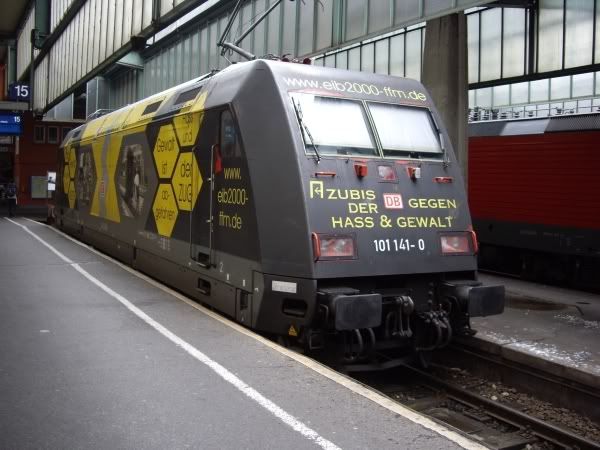
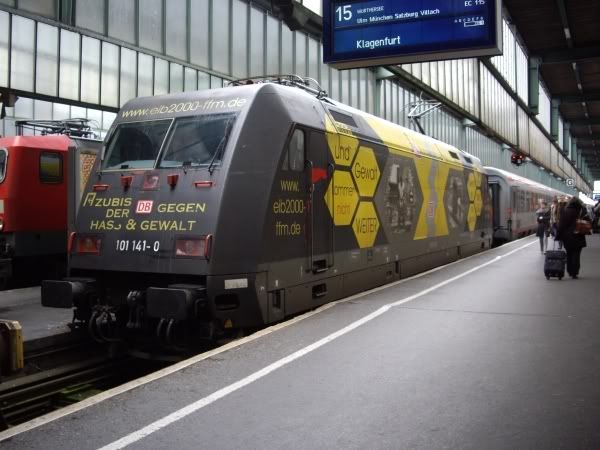
I've finished the baseboard for Westerooge, but three sheets of card stuck together are not that visually interesting, so thanks to the wonders of digital cameras, here's a couple of pictures I took in Stuttgart station earlier today.

101 141-0 is one of DB's crack express engines, and is currently in a black advertising livery as part of a nationwide campaign against hate and violence. I saw it as it entered the station and scuttled around with my camera. The things I do for you, honestly.


Deutsche Bahn is one of the enlightened administrations that still runs trains behind locomotives, and they often change them here, which is why 101 141-0 is is uncoupled from its train. This operation is quite common in Termini like Stuttgart where it's as easy to put an engine on the back and pull the train out again on the next leg of its journey. They are pretty slick at it too, with the new engine following the train into the platform as it arrives, an interesting spectacle for those of us used to 'only one train in section' working. One of these fine days I'll post a video of this.


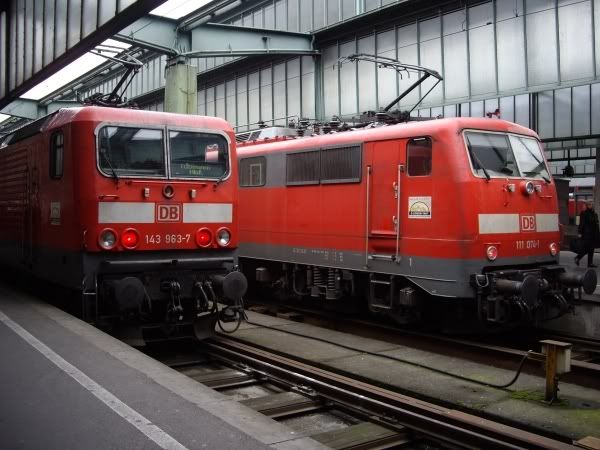
As I was going to the S-bahn (Interurban/rapid transit) train anyway I wandered along the ends of the platforms and took some pictures. There were the usual locomotives for Stuttgart: a smattering of units, and a few local trains with class 146 units and the class 143 'Einheitsloks' pulling them. For some reason I really like the class 143 locomotives so despite having loads of pictures of them already, I added this shot of 143 963-7 to the collection.

Now to go and see if the glue dried on those sheets of card. If it has, and they don't warp overnight, I may even get some track laid tomorrow...

Tuesday, March 18, 2008

Sinsheim 2008

To one used to British model railway exhibitions, the 'Faszination Modelbau' in Sinsheim is immense. It covers just about everything: model railways, trucks, diggers, planes, boats, racing cars, and tanks. Eldest Son and I were going to meet Alexander Rainer and see his 'Rittigsmühle' model, but it took 20 minutes for us to even find the model railway section, and even then finding a shoebox-sized layout in the huge hall proved difficult. Eventually we stumbled across it by accident while craning to see around the back of a well made N scale model:

Rittigsmühle: The new circular section with incline.
Track going off bottom right leads to the mill itself.


The Mill yard with Alexander's diesel shunting.
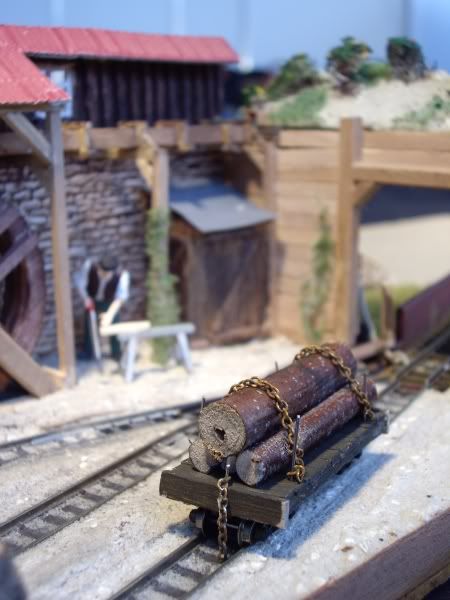

Wood delivery waits to be unloaded.

I'll admit I went a bit overboard with pictures- but It's been so long since I went to an exhibition, Alexander's scenery was really nice, and besides, I'd been invited to take my little diesel and mess van to do a guest turn, and despite them being far too big for the tunnels, I wanted to take pictures of them on a real railway as well. I've tried to keep down the pictures here, instead putting most of them in a new album on my fotopic gallery
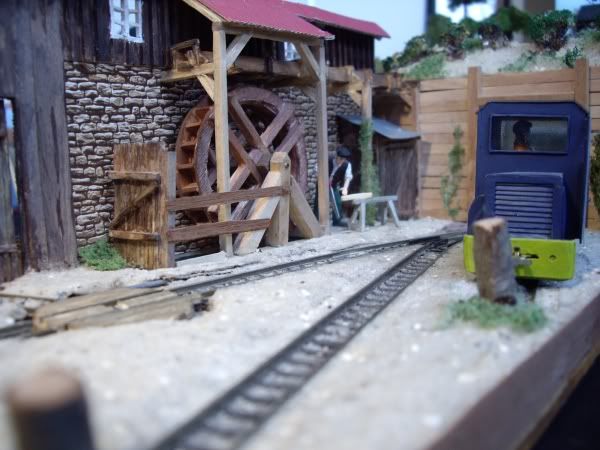
My loco in the yard at Rittigsmühl,
pretending it is small enough to go through the archway.
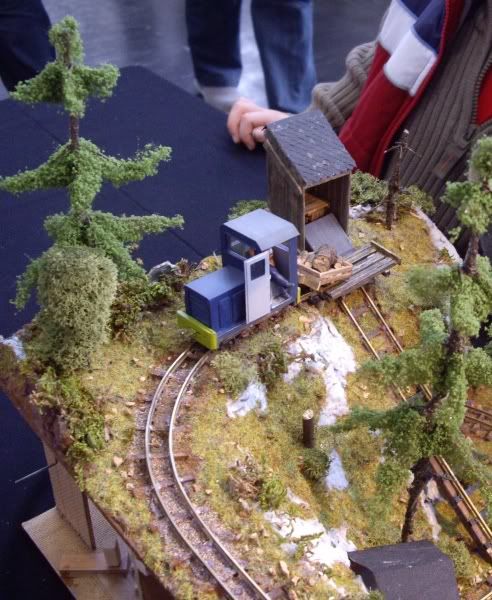

The one place the diesel could run: on top of the incline.


Diesel in the trees.


The mess wagon spent the day exiled on here with the workman vainly trying to push it.

Of the other layouts, the majority seemed either to be in the 'Overgrown train set' style, with lots of automation but rabbit warren tunnels and carpet-like grass, or very, very big (although very beautiful) modular layouts based on German and American prototypes. Fortunately, around 'Rittigsmühle' there were a couple of other small models which not only looked as if they would fit into a normal house, but were also very well built and presented.
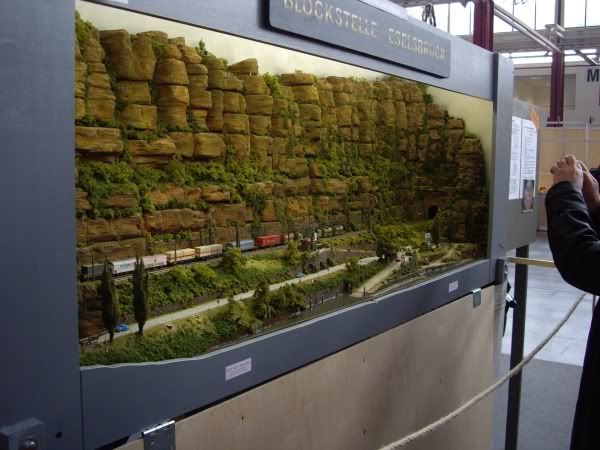
'Blockstelle Eselsbrücke'

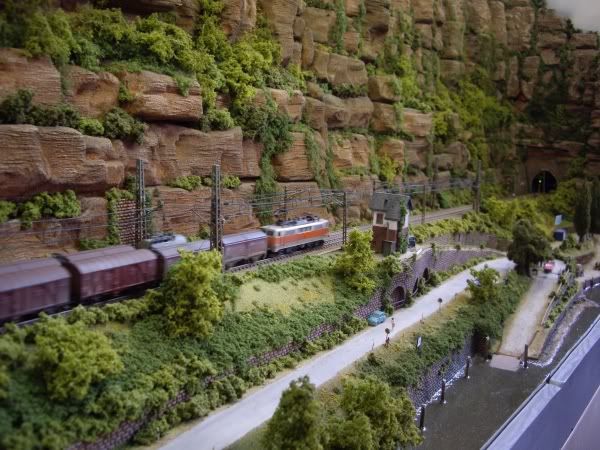
One of these was 'Blockstelle Eselsbrücke' in 'N' gauge, which looked like you could hang it up in the living room. Maybe that's what the owners do when at home. It was backed by a massive sandstone cliff, with a double track main line running along the bottom, along which trains ran every few seconds.
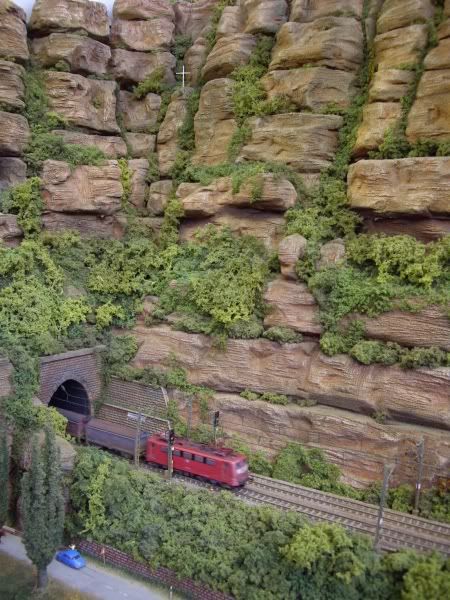
Freight bursts out of the tunnel.


View of the slipway to the river. Another freight passes.

The cliff fronted by a double-track electrified main line is probably based on a famous section along the Rhine between Frankfurt and Köln, and like that line, trains ran past every few seconds. It was also carefully detailed without being overdone, with some German details like the cliff top viewpoint and the cross on an overhanging rock. The model had sound, but this was confined to a CD of birdsong playing on a continuous loop. Very nice. On second thoughts, I wouldn't hang it on the wall, I'd put it where the TV usually stands.
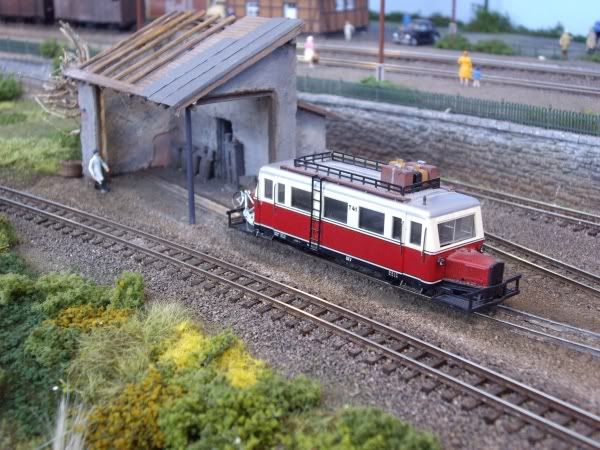
Weimar railcar on the Döppenauer Kreisbahn,
complete with the drivers bike.

The other layout I found myself repeatedly looking at was the 'Döppenauer Kreisbahn', a narrow gauge local government railway in 1950's West Germany. It took me a while to figure why it looks so open, but I think it was the way the track is angled to the front of the model, and the scene rises gradually towards the rear, rather like a stage in the older, grander theatres.

This model also had a lot of Cameo scenes, but what I really liked was the way the line and station was part of the landscape, and the separate scenes were linked by the railway. I guess I'm also biased because it had some nice big diesels as well...

Diesel-hauled train running into the station at Döppenau.
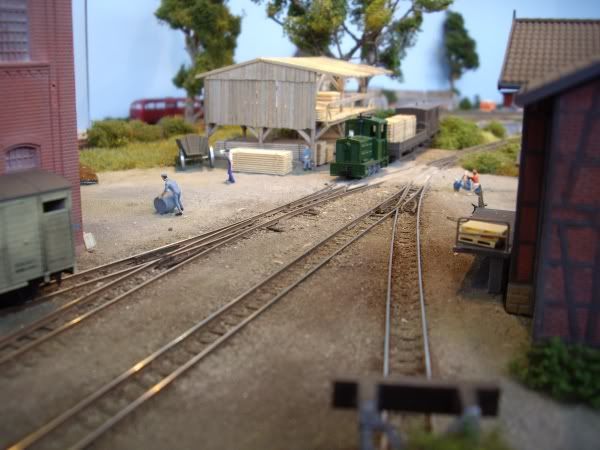

Freight yard at Döppenau

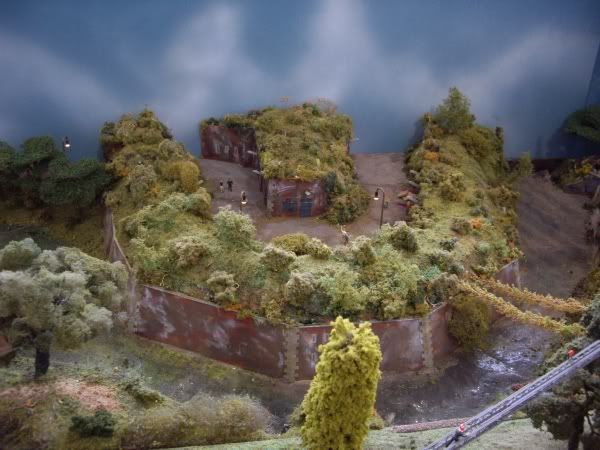
Of the larger layouts, my favourite was 'Balen', a visiting model from the Netherlands which included this Dutch street and fortress. The townscape had a boat running past through the canal.



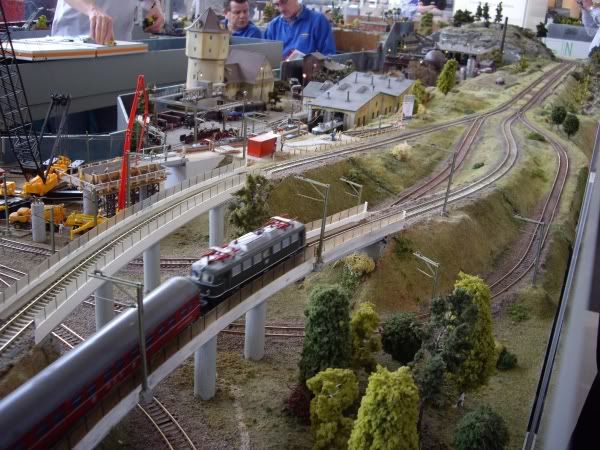
Further along it had this realistic modern double junction, with a large construction site behind.


American outline models aren't really my thing, but this little scene caught my eye, and appealed to my dark sense of humour

One of those days...

I think I'm failing in my education of eldest son though. As we came into the hall for the first time, he saw these and fell in love, and all the rest of the time he kept asking me to take him back for another look:
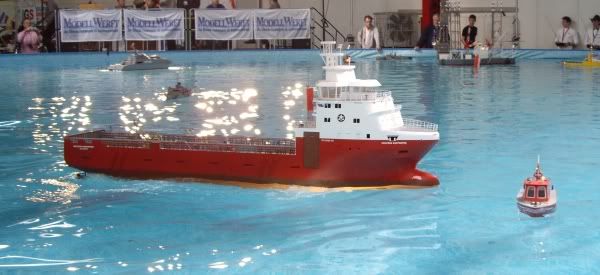
Oil rig supply ship and fire launch on the boating lake.

All the way home he was talking about radio controlled boats.

I think a new project is coming soon...
Saturday, March 01, 2008

How 'narrow gauge' can work.


In case you think I've forgotten about modern image narrow gauge, here's a short (90 second) impression of the Matterhorn-Gotthardbahn in Switzerland, showing how effective a narrow gauge railway can be if we just give it the chance. It's not trying to restore something from the past, laudable though this is, but it is a modern, if small railway serving the local area. The passenger trains and 'Glacier Express' in the video are just a part of their traffic: they carry a lot of freight and even have motorail services on one section of the network.

I like the covered bridge that opens onto the railway shown in the video. I'm fortunate as well that the Schwarzwald has a lot of these all over the place. I think a smaller version may turn up one day. Those B-B electrics look good too.

Wednesday, February 27, 2008

Industrial Archaeology.


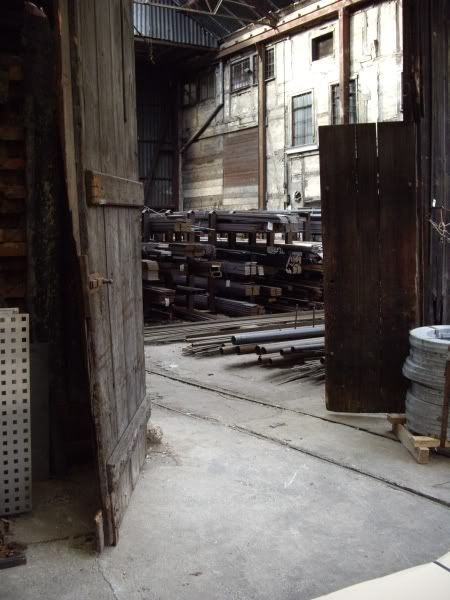
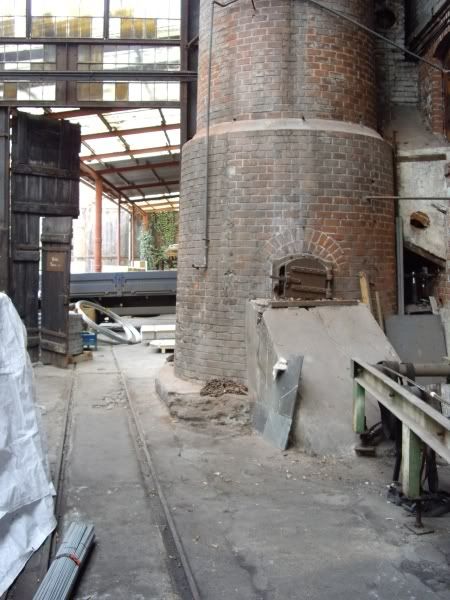
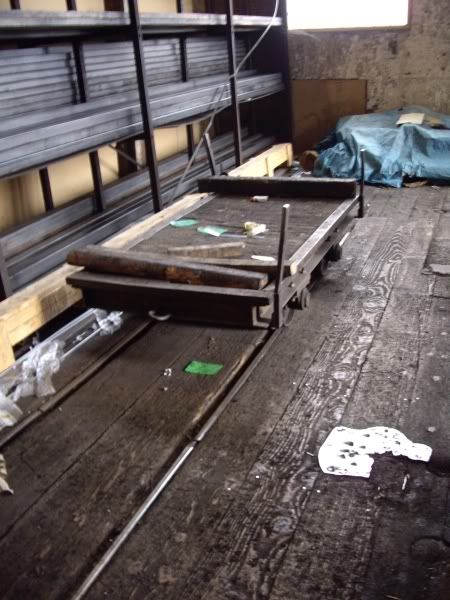
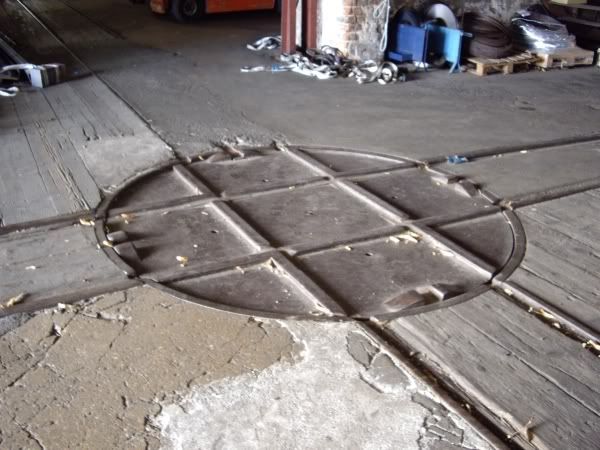
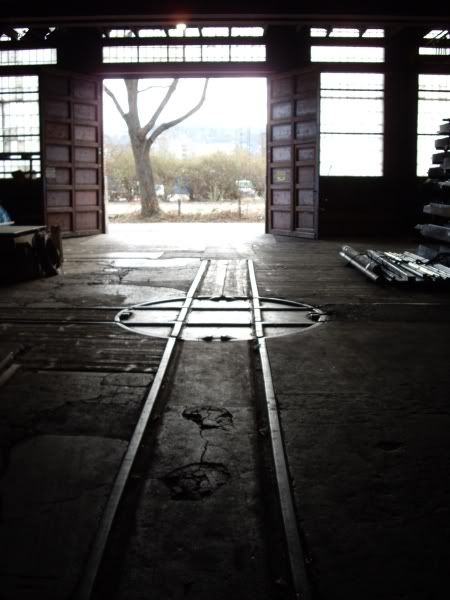
Yesterday I was in a warehouse visiting the location shooting of a film project I'd helped out on last week. This isn't half as glamorous as it sounds, but while I was there and everyone else was busy doing important technical stuff I don't understand, I happened to see a wagon turntable in the ground, which turned out to be part of a small system which I estimate to be 50-60cm gauge. The track looked pretty old and clapped out, but then so did much of the warehouse, and one of the staff said that they still use it regularly. He also said I could take pictures, so I ran off and did before someone else came along who thought otherwise.

The back of the works, looking out of the hall pictured above: disused track and chimney.


The only wagon I could find, lurking at one end of the warehouse.

Fairly heavy-duty cast turntable

View out of the front door. The tree is at the edge of the former standard gauge goods yard. The narrow gaige track is very close to the door and further along the street there are the remains of some standard gauge wagon turntables opposite similar factory doors. I did wonder if a standard gauge siding once came through the doors.

Overhead view showing the scales in the background. The disused track dissapearing bottom right goes into the offices where it runs along a corridor

I wanted to take a picture of the standard gauge turntables but unfortunately when I went back someone had parked on them in defiance of several 'no parking' signs. I'll try another day.

Monday, December 03, 2007

Ideal narrow gauge coaches?

The Zillertalbahn's new push-pull train.
Click on the picture for more details (in German)

Every now and again in this blog, I have a bit of a whinge about how narrow gauge railways are treated essentially as heritage lines, and often end up using dated stock with several steps at the entrances (and narrow doors to make them really wheelchair-proof), arcane operating methods and low speeds. So what would my idea of perfect narrow gauge passenger stock look like?


Well, ideally:

Modern, not just a replica of an old coach but built for modern needs in a modern style.
At least partially low-floor
Probably loco-hauled for flexibility and maximum stock usage
Push-pull with a driver’s cab in the coaching stock to minimize runarounds
Air-conditioned
Wide doors with push-button operation, which actually close without allowing a draught
At least partially low-floor
Cassette toilets
Comfortable seats (with cushions)
Corridor connections
Proper passenger information systems
Quiet and smooth when moving.
Did I mention that it should be low-floor?

Essentially what we are becoming accustomed to on a bus or standard gauge train. This sounds a bit of a pipe dream I know, but the 760mm (about 2’6”) gauge Zillertalbahn in Austria has ordere new carriages which look remarkably like my description. The English page is for the tourists so it doesn’t mention them, but you can see an artist’s impression of the inside and outside here. You can also click here for pictures of the first units being delivered.

(Yes, they are partially low-floor)

Saturday, November 10, 2007

Big Harz

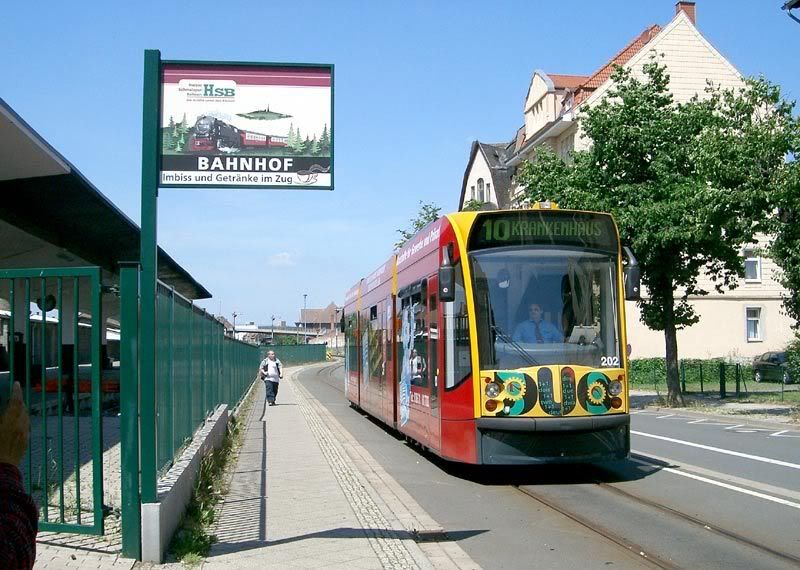
1000mm gauge 'Combino Duo'
entering Nordhausen. Source: Wikipedia


Quedlinburg is the sort of name I could not come up with given a German dictionary, a thesaurus and three weeks to spare. Even if I could I doubt anyone would believe it. But last year Quedlinburg became the northernmost tip of an 8,5km extension of the Harzer Schmalspurbahn (HSB) in central Germany. Not only that, but this extension is along a standard gauge trackbed.

The narrow gauge used to meet the standard gauge at Gernrode, where the HSB have maintenance sheds and sidings, partly for their large fleet of steam locomotives that run all year round. After Gernrode the standard gauge skirted the northern side of the mountains, and eventually wound back to a junction in the town of Frose. In 2002 a bridge failed on the standard gauge line a short distance from Gernrode. Services from Quedlinburg ran as shuttles to Gernrode while the local government started a study to decide what to do about it. The study seems to have moved at the usual relaxed pace of government enquiries worldwide, and eventually decided that surprisingly, the narrow gauge should be extended to Quedlinburg.

Decision made, rebuilding began on18th April 2005. A metre gauge line was built which scythed through the standard gauge at Gernrode in a large ‘S’ to join the former standard gauge alignment, (you can find a track plan here
) and by the 26th of June 2006 regular services were running along the line.

At Quedlinburg the station was rebuilt with the narrow gauge replacing standard on one platform. (Track Schematic) The HSB has regular steam services so there needs to be a run-around, and a siding was added ‘just in case’, but that was all. One signal box controls the lot. I imagine a similar situation at Wildberg on the Körschtalbahn. I’ll bore you about that another time.

This is good news, in that the narrow gauge is being used for a public service, and economically providing a link people may actually want to use, but I can’t help feeling that the HSB is preserving what was, rather then developing further. I’m sure steam brings in the tourists, especially the amazing Br 99.23 & 24 2-10-2 tank engines the HSB has, but compared with the modern, low-floor, wide access units they are “replacing”, how attractive do the railcars or loco-hauled stock with a narrow door and steps look, say, for a mum with a pushchair shopping in Quedlinburg?


Fortunately, there are signs of further improvement in the town of Nordhausen, at the southern end of the system. The town has had a metre gauge tram system since 1900, but the long-desired connection to the HSB was not completed until 2004. For vehicles, Siemens shoehorned an 8hp BMW car engine into a combnio, and made the ‘duo’ which shares the low floor and wide doors of its conventional electric cousins, but which switch to diesel on the country section and run as far as Ilfeld-Neanderklinik. There is nothing ‘heritage’ about the three new units, so I doubt the tourists will go for them, but they are just what you need to go shopping or take your bike home in the rain.

Hopefully they will one day be joined by several more units running over the rest of the 140km system and into Quedlinburg.
They would also be ideal for the Körschtalbahn to run through trains to Spitzenwald. I wonder if I could make one in 7mm scale?


(For more general information in English, with a map of the Harz, Wikipedia has a page here)

Tuesday, September 18, 2007

Lokalbahn Mixnitz-St. Erhardt


Another video, and some great evidence for the premise behind the Körschtalbahn, that narrow gauge railways can effectively transport goods and people. Longer suffering readers will know this is a regular theme for this blog, and the line looks a lot like the imaginary KÖB, even down to the track gauge and electrification. The commentary is in (Austrian) German, but it’s worth watching for the pictures, and I can give a rough idea of the history of the line and current status thanks to Wikipedia Germany .

The 760mm gauge 800v DC line is in the state of Steiermark in southeast Austria. There used to be passenger services but they were withdrawn on the 31st of July 1966. The Steiermark government railways, (You'll hear more about them sometime) and run the remaining section from the Austrian federal railways (ÖBB) system at Mixnitz-Bärenschützklamm to the magnesite works in Breitenau. It seems the line has a future: After major flooding in August 2005, it was rebuilt by mid-October, and the stations in the video are recently reinstated, mostly for charter trains.

All of which is good news, but what if the investment could be extended to high-capacity bogie wagons which could move at more than 20kmh, and modern, low floor coaching stock similar to the standard gauge ‘Desiro’ seen at the start of the video?

Is this a dream, or an eco-friendly rural transport solution for the future?

Tuesday, September 11, 2007

Skippy

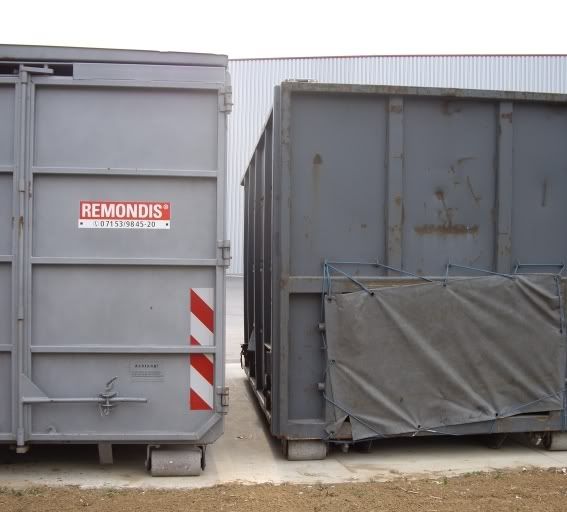
Recently, I was running an errand and I passed a factory that uses a lot of roll-on containers, and very obligingly stores them next to the cycle path. So I took some photos in preparation for the skip-building project. This one shows the variety in these ‘standard’ designs. I know I should start by making a square-cornered version like that on the right, but something tells me I’m going to have a go at chamfered corners at some point… By the way, the fabric covering seems to be unique to this company. Any ideas why it is used and how would be gratefully received…

Wednesday, July 18, 2007

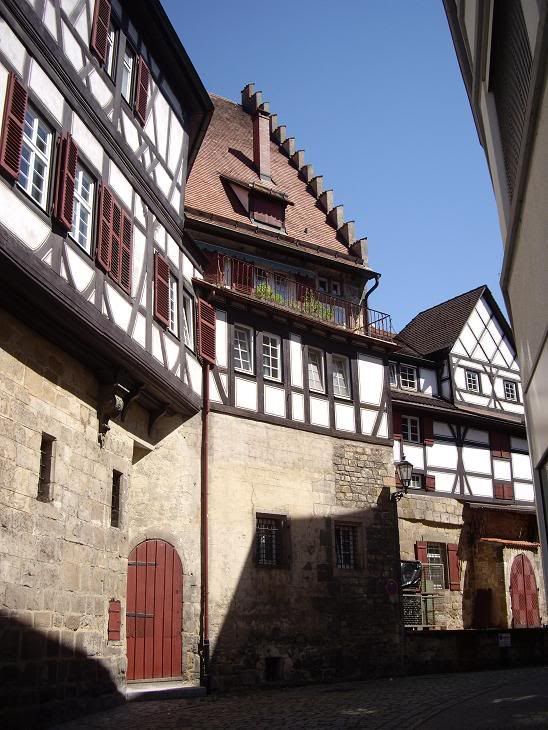
Back Streets

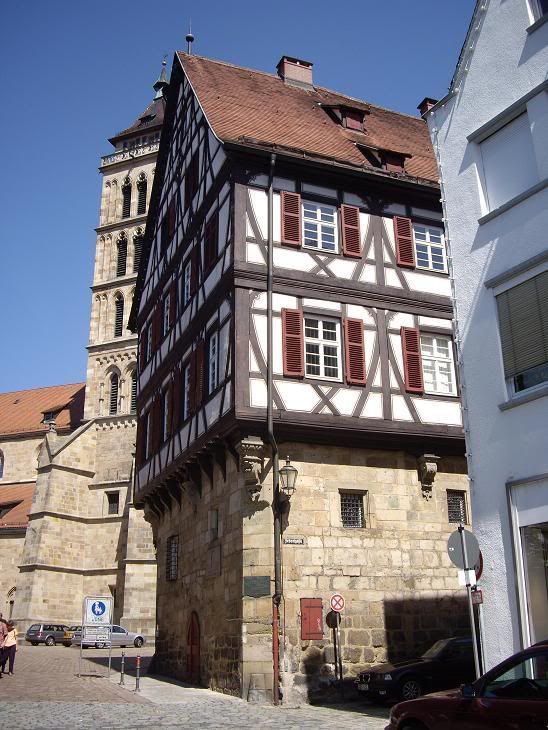
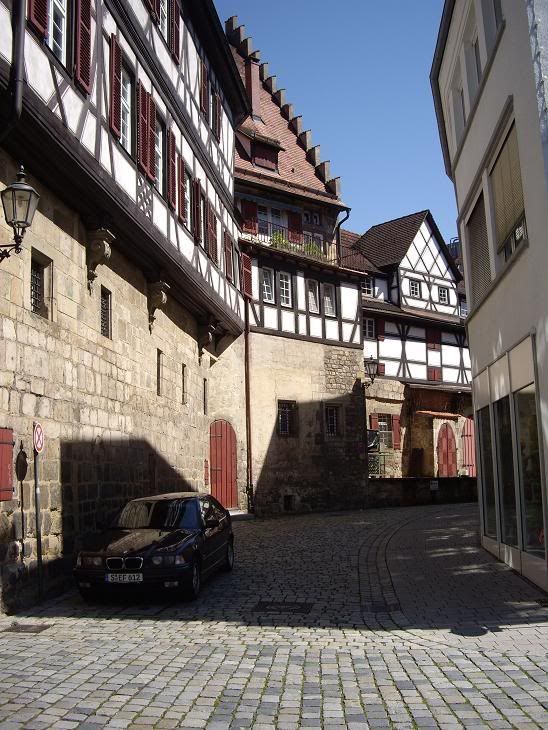
In our local shopping centre of Esslingen I took a short cut behind the local "SektKellerei" or Champagne factory, Sekt being German Champagne. I doubt I'd ever try something so huge, but it gives exactly the feel I'm after, of being old and there for a long time before these new-fangled cars came along...

The Champagne factory is the half-timbered building. Local church behind...

Looking into "Zehentgasse" ("Tithe Alley") Complete with illegaly parked BMW

Further along "Tithe Alley"

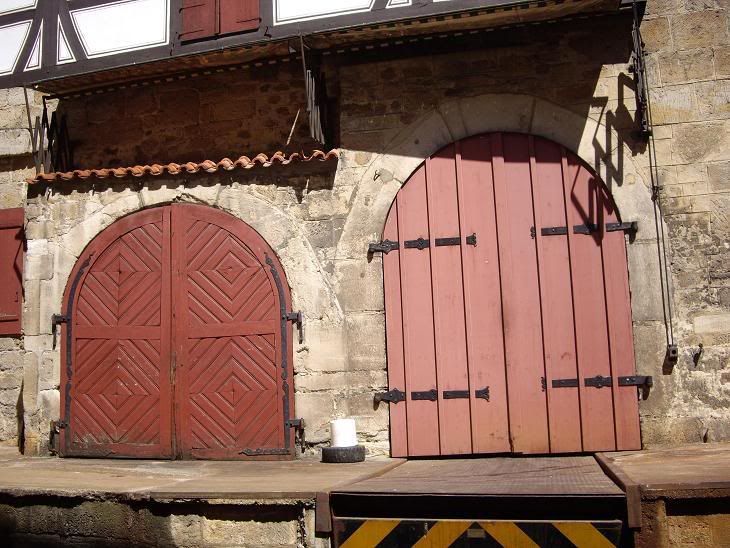
The Main delivery doors and loading bay


Deliver door detail. Remarkably still used regularly for "Sekt" deliveries.

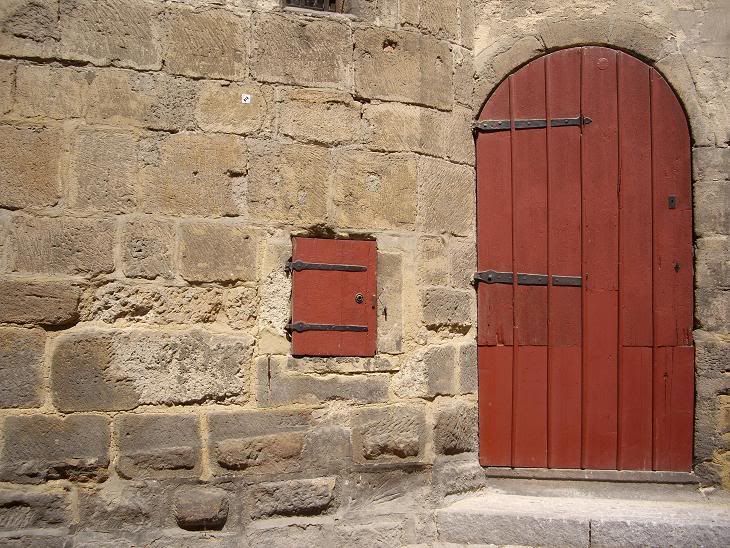
I could see this being part of a future project (ie when I know how to make stonework) It would makd a very attractive subject for an 09 model. I can just see a small critter pullinf a rake of flats out of the alley and curving into a cellar through the big red doors...

I'm getting tempted again...

By the way, this blog is going to be a bit quiet for a couple of days as we will be visiting a friend in Essen, but I'll be back with pictures and ideas, so watch this space...


Saturday, July 07, 2007

Where the rails were...

Altensteig railway station
from the track side (See below)
Water is from the fire practice.

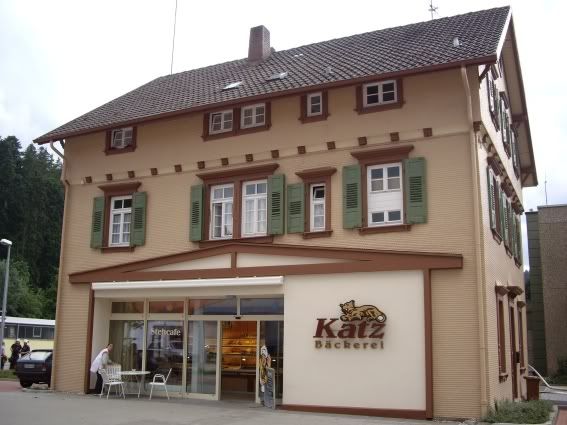
My memory of Altensteig railway station was a large wooden shed with the station building at one end. Imagine my surprise then, on finding this building stranded between a Supermarket car park and the Feuerwehr practice area.

The Feuerwehr training: Lights and everything, to the delight of the oldest boys.

No big shed to be seen. I just shoved that into my subconscious and took pictures, assuming that memory was playing up.
So I was quite relieved to find a picture dated 1996 clearly showing a very big wooden shed to the profile of the frame on the bakery wall. Another picture, taken from about the same place as the one at the top of this entry, showed that the track came in front of the building here, with the freight road stopping just before where where the black car is parked, and other lines coming out as far as the fireman's elbow visible extreme right. I have a possible prototype if I feel foolhardy enough to make a 7mm scale version...

No promises.

Wednesday, June 27, 2007

Spitzenwald

Let’s face it: you can have too many pictures of a white plasticard van, so I figure it’s time to introduce my ideas for “Spitzenwald”, the layout which will hopefully soon grace the Ikea shelves in our living room. The original plan was for an inglenook-style model, but that was replaced when I tried it out- running 64mm wide stock makes for big overhangs and effectively shortened the sidings. The current plan is partly plagiarised from Bob Hughes’ N-gauge “Altgarten” model –in particular his idea of putting the station and goods shed on the siding at rear. Bob also helped me to tweak a couple of details, which I’m grateful for. You can see the original "Altgarten" here.
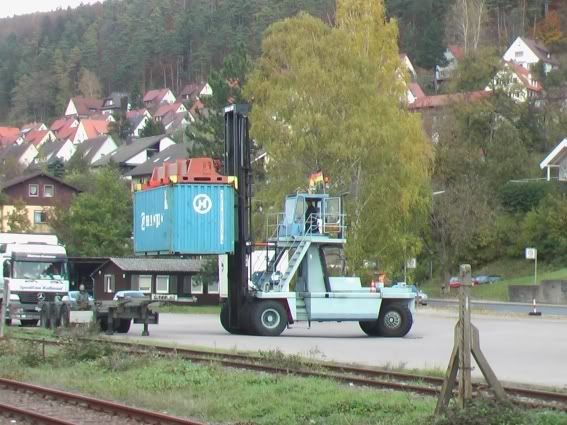
During operation, I’d assume the two lines exiting the scene at left would be a loop, from which there would be access to an intermodal terminal. This wouldn’t be a big operation: probably just one siding with a concrete pad and a container crane, maybe a warehouse for more specialised deliveries or palletts:

Photo Sharing and Video Hosting at Photobucket
Container stacker at Nagold railway station, a few kilometres away from the Fictitious KÖB.
The "terminal" at Spitzenwald would be similar.

Of course in reality it will end in a couple of sidings or a traverser, depending on how brave I’m feeling at the time.
At the moment I’m leaning towards a wood yard as a scenic barrier in front of the fiddle yard, as wood is most likely to be the staple traffic of the line, (more on that at a later date). The road bridge may be reborn as an old city wall: this would be narrower and possibly more convenient as a scenic break, and could turn with the backscene a bit as well. It’s not unknown for railways to enter older towns this way in Germany.
The KÖB will also have a maintenance shed for railcars: This is common on the smaller independent railways here because the early commuter and school services need to start at this end of the branch. At the moment it’s one road but I may have a low relief door at the end of the middle road as well.

Photo Sharing and Video Hosting at Photobucket
Small railcar fuel and maintenance point in Endingen, near Freiburg, used by road and rail vehicles. I like the pump to the right of the door...

Behind this is the general freight shed, probably used by the local farmers cooperative. It would also be a place to unload post wagons. I expect the station will have been rented or sold, so people will have to get their tickets from a machine on the platform.
That’s the plan anyway. I now hesitantly offer it up for criticism, ideas, thoughts, and suggestions before I start gluing things to other things…

Tuesday, June 19, 2007

Soapbox

Progress has stalled slightly because of work increasing a bit: lots of late evenings when you work with young people. I’m also stuck for a way to make the roof of my van: I can’t find a former to bend it: the only thing long enough is an aerosol can, and the mind boggles as to what that would do if put in boiling water with plasticard strapped to it… and there is a lack of support on the van itself. Next time I’ll make it differently. How many times have I said that?

However, I’ve found a video that is very interesting, and even better, largely on topic for this blog. It shows an Australian sugar train running fully loaded on a two foot right of way. Okay, so it ain’t exactly the TGV but it does show that really small gauges can carry big heavy bulk trains. Another good excuse for modern image NG…

Tuesday, June 12, 2007

Driving to Altensteig…

Former Terminus at Altensteig, now a bakery

Long ago the people of the Nagold valley (about 20km south of the fictional Körsch valley) transported their logs in rafts on the river, in similar style to American loggers. Here, river pilots would build a wooden dam with gates, wait until there was enough water, then open the gates and ride the wave for a few kilometres until the next dam. It must have been a pretty exciting existence: the mind boggles as to what happened when several tonnes of sodden pine came shoshing around the corner and met something unyielding. Nonetheless, until about 150 years ago this was the way of shifting wood from the Nagold to the Neckar river, and on to the Rhine and Holland. And to think now people pay to do this sort of thing.
All in all I expect most people were relieved to let the railway take over. The metre gauge line from Nagold to Altensteig opened in 1891, but only lasted until 1967 before the prevailing wisdom turned to roads. This seems a great shame as the town now has all manner of industry, not to mention tourists coming to the old city, so it seems sad they didn’t keep going with rail. All that is left of the railway is a few buildings, a wagon planted alongside the road, and a cycleway.


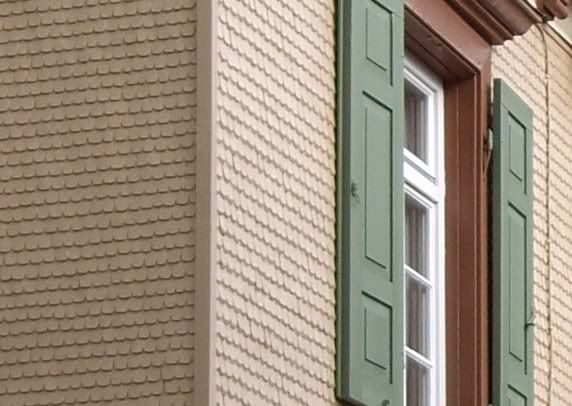
Station detail showing the intricate shingles... Perhaps I'll just have a plain wall...

All of which doesn’t leave a lot to go on. I was hoping to have a good look at the line and the area to get some thoughts on how the Körschtalbahn (KÖB) could have been constructed, how it could look, and what it could carry. Judging by the Altensteig line, the KÖB would have followed a road most of the way with occasional short detours through villages or round hills. By the looks of it, frequently lurching across the road would be in order as well. The stations are typical European pattern: Goods shed with station alongside, the sort of thing that should fit onto the back of the layout. The low-key way the railway squeezed between buildings is very attractive although I haven’t any ideas yet how to make it happen- perhaps have all the buildings a few degrees different to the track, to give an impression of “The buildings were here first” and possibly “added-on” loading bays to take advantage of the loading possibilities. I have some pictures of local building to give me an idea: I'll post those, along with some thoughts on traffic types soon.

Now. How do I make shingles?

[Update, 13th of June 2007: Our pastor (who grew up in Altensteig) loaned me book on the line so I can actually see what it looked like and where it ran. I'll read it through -which may take time as it's in German, and inflict my thoughts on you later]

Monday, May 28, 2007

Transports of delight.

The van is coming together: the bogies are now properly fixed, the “bodge” referred to last week having been replaced by self-tapping screws (thank you Chris Krupa and Steve Bennet for pointing out the obvious solution), the ends are approximately vertical and properly attached, and the sides will be built over the next week. Remarkably the DG couplings are not only glued on, but also seem to work.

The only problem in this happy tale is that the sun abruptly went AWOL this morning, and it is now overcast and dull. This means I can’t make any photos of the model, so you'll just have to trust me until such a time as the sun returns and I can get some real pictures. (Note to self: get a daylight bulb...) I’m not really upset about this as it meant the sun shone for my eldest son's 5th birthday yesterday and he was able to ride his new bike for hours.

Besides, a friend sent me a link to this video last week, showing some narrow gauge in Poland using transporter wagons. After watching this 5 minute video I'd gone from being clueless on how transporters were used, to knowing enough information to model my own. There would have to be a couple of differences (Standard gauge wagons would need to be moved by locomotive, for example) but at least the mechanics are clear, and never mind that the loco has clanky bits. I believe this operation lasted until quite recently, when the lack of investment caught up with the line and the traffic went to the roads.


In search of diseasels I came across another Polish narrow gauge line. Now I don’t know a great deal about Polish lines, but they certainly manage to have a fair bit of variety. Here they manage to include another steam loco, one of the ubiquitous LxD2’s from Romania which were the standard large diseasel in Eastern Europe on a heavy freight, and a not to bad looking rail car.

I will leave you to enjoy this, while I go and look for a daylight bulb on Ebay…

Wednesday, May 09, 2007

Success…

Gotcha... A trio of DD51's showing three livery variations in Yokkaichi.

Yokkaichi is not a pretty place: it’s a port city where oil tankers offload, and seems to be largely composed of refineries. What it does have is a large yard where you are very likely to see DD51’s. I can see that this won’t make the tourists flock to the place, but I appreciate it. I had the time and realised that my Japan Railways pass was still valid, so middle son and I went off for an adventure. The station is surrounded by the yard, which forms the exchange point for the port freight, and an intermodal terminal for Japan Railfreight’s mini containers. It also has a wagon repair depot and a permanent way shed. Funnily enough it reminds me of Bescot Yard in the UK, where I spent many hours as an impressionable youth.

I got pictures of several DD51’s and a couple of DE10 C-B locomotives as well. Thank goodness for Digital cameras… I confess to getting a bit carried away, but I had been looking for these locos for a while and as we fly out tomorrow it was probably my last chance. The people on the platform seemed bewildered by me wandering up and down the platform taking pictures of grubby engines. The one thing I missed was a blue and white industrial shunter, probably from the Ise Railway, which had been hidden behind a train of tanks. I was at the other end of the platform when the train pulled out and just saw it disappearing under a distant bridge.

Never mind. I can always come back next time.

Mindful that most people don't share my affliction, I've only included two images from the mass I took. #1029 stands ready for its next duty.

An added bonus was a decent shot of c-b DE 10 #1512 showing the unusual wheel arrangement.
I wonder why JR don't name their engines?

The Takasaki Light Railway

In Takasaki we met with Matthew Foster his wife Hiromi-san and Rinka, his little girl. Matthew is the owner of the Takasaki Light Railway, the only 16mm gauge model railway in Japan. Matthew has used a heck of a lot of ingenuity in making the line as there are almost no parts or kits available locally. He built his railcars (like the one in the picture) from card and plywood with a motor from a radio controlled car kit. Unfortunately the railway is being rebuilt so a visit wasn’t possible but the family kindly invited us out for lunch instead.

Tuesday, May 08, 2007

To the hills…

Nagano is in the mountains and is known for skiing, a sort of Japanese Zermatt, or what Zermatt would look like if the locals decided to build skyscrapers and a Shinkansen terminal in the middle. Between there and Nagoya is a lot of forest and lumpy bits, cut by rivers in deep gorges with spindly bridges, and a railway.


This is a bit of the mountain section. The line which peels off into a tunnel on the right as we leave the station is actually a long loop, one of several in the mountains which I expect speeds things up as the line seems to be running near to capacity: about every second station we passed a passenger or freight train.
You can see the tilt capability clearly on the curves. The wobble caused by me holding one of the boys while filming. I really need to get a tripod. In this video the train accelerated to about 80kph, so I filmed the next one when we were on a straighter section and moving faster- about 120kph at the beginning...


It's as wide as a British coach, seats fifty in comfort, and rides like a dream, but honestly, this is a Narrow Gauge train...


Monday, April 30, 2007

Halfway Point

I’m about halfway through this time in Japan, and I’m starting to twitch. I really want to get back to building models.

I’m filling the gap a bit by reading the current issue of “Narrow Lines”, the bi-monthly issue of the 7mm Narrow gauge Association, and “Model Railways on a Budget”, which was written a long time ago by C.J. Freezer. Some of the ideas may seem a bit ‘dated’ like the suggestion to use Post Office relays (Remember those?), but to be fair that’s not a fault of the book –it was published 20 years ago after all. It remains a useful item for those of us who have to really consider every expenditure and besides I’m a bit of a dinosaur with technology and naturally warm to suggestions like using bicycle spokes for point control.

I picked up my copy in a second hand bookshop on the Wensleydale Railway in the UK for an appropriately miserly four pounds. I don’t know if a similar book has been printed since- it would bee an excellent idea, and a good antidote to the style I see frequently in Germany, where everything is available off the shelf and model making is known as the rich man’s hobby. I was able to start again because I had just enough knowledge to keep my costs down, but anyone walking into my local model shop in Stuttgart would get the impression that you need to mortgage the house and have a handy spare barn to make a decent layout -which cannot be good for the future of the pastime. Hopefully there will still be a few of us bodgers who follow the less well travelled paths and are willing to compromise on perfection in order to have our ‘own” railway at an affordable price. Bicycle spokes and all…

Perhaps there is a “Low cost model making conspiracy”. Come to think of it, “Model Railways on a Budget” is a small red book. Is there a subliminal message here?

Virtual Modelmaking

This week I did a Very Silly Thing: I signed up for the ‘Gnatterbox’ after lurking about for some time. This is a forum full of very good and very friendly model makers, all building minimum gauge models of various descriptions. The main focus is Gn16: G-scale models on 16,5mm track (Used by some misguided souls for 00/HO standard gauge modelling) but last week I found the 09 section (Same scale as the Körschtalbahn but with 9mm gauge track) and I was hooked. Even worse, Colin Peake has updated his “Shifting Sands” gallery, which is built in this scale/gauge, and is beautifully modelled and detailed and pretty small too. Now I keep thinking about the 9mm gauge chassis I’ve got lurking in a drawer at home, and it occurs to me that it wouldn’t cost much to get a few Black Dog Mining wagons, and I could just transfer figures across from my main project when I want to... I’m sure a small shunting layout won’t take up much space…

Wednesday, April 25, 2007

Sunset on the Crossing…

I told you there would be more pictures here… This crossing is a favourite location ever since I first wandered across it a few years ago. As an added plus the sun shines along the track as it sets. Here’s some first attempts at linesiding there. Funny how you see some things after the event: I didn't notice the utility pole behind the barrier until afterwards. Ah well...

View towards the station


Toba bound train passes. Notice that this is about the same width as a standard gauge "sprinter" in the UK. So much for "narrow gauge is small" I set this up to quickly and cropped the top of the "X"


Cars crossing the line showing the cramped nature of the site. Just after I took this picture another car turned up from behind the camera.

After the sun went down one of the more modern two-car units turned up. Of course.
(Anyone who has information to add on any of the pictures please feel free to comment)